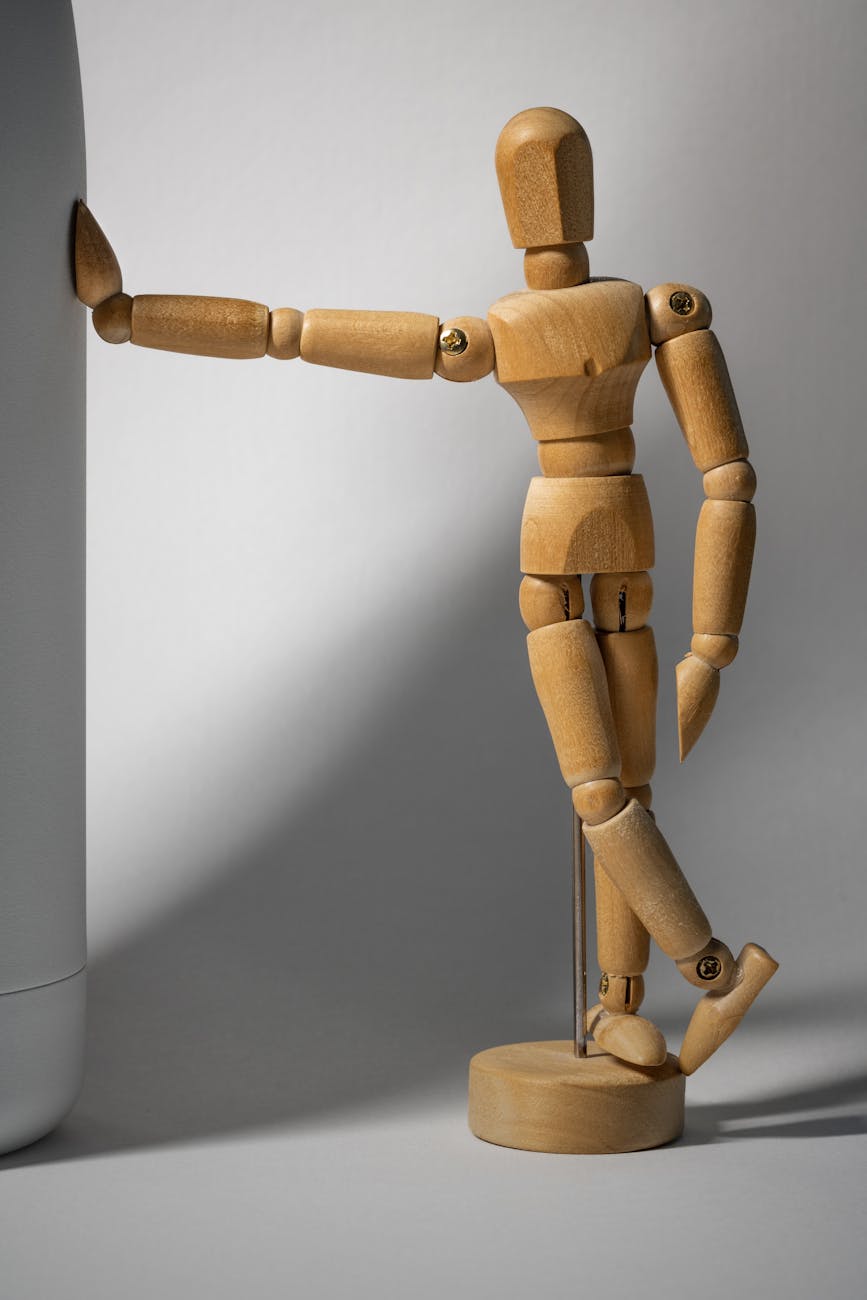
• Three Simple Rules to Build Yourself So No One Can Manipulate You Again

    Three Simple Rules to Build Yourself So No One Can Manipulate You Again


    Awareness Is Not Defense — It’s Freedom

    We all like to believe we’re too smart to be deceived.
    But manipulation rarely begins from the outside — it starts the moment we lose awareness of ourselves:

    when we forget who we are,

    misunderstand what we feel,

    and react instead of choosing.

    Real protection doesn’t come from caution; it comes from awareness.
    Understanding yourself is the most powerful defense — not because it hardens you, but because it grounds you.

    Here are three rules that, once practiced, make you far harder to sway.


    1. Identity — Who You Are Before Anyone Defines You

    Identity isn’t a name, a résumé, or a public role.
    It’s the steady sense beneath the noise of everyday roles.
    When that sense fades, we lose our center — and begin to mirror others instead of expressing ourselves.

    We start wanting what others want for us.

    Knowing who you are frees you from the constant hunger for approval.
    You begin to choose, rather than be led.

    Many people carry an identity shaped for them, not by them.
    Family, school, society — each adds a layer of who you’re “supposed” to be.

    Until one day you pause and ask:

    “Is this what I truly want — or what I was conditioned to want?”

    True identity isn’t given; it’s built.

    Every decision you make, every habit you change, every moment you choose awareness over reaction becomes a brick in the foundation of who you are.

    Knowing yourself is the first shield against manipulation — because when you understand your worth, it’s no longer negotiable.


    1. Emotional Awareness — Feel Without Exploding

    Emotions aren’t mistakes; they’re energy looking for direction.
    Ignored, they drive us.
    Understood, they serve us.

    “You can’t heal what you can’t name.” — Brené Brown

    An unnamed emotion owns you.
    A named one becomes information.

    Most of us don’t lack strength — we lack emotional vocabulary.

    We label:

    • fear as “stress,”
    • anger as “anxiety,”
    • sadness as “fatigue.”

    And we end up reacting inside a blur.

    Emotion isn’t the enemy; it’s a map.
    Awareness doesn’t erase pain — it gives it meaning and direction.

    When you name what you feel, balance becomes natural.
    You can feel deeply and still stay grounded.


    1. Self-Control — The Power of Silence

    Self-control isn’t coldness; it’s awareness before action.

    There is always a brief space between emotion and response — and in that space lies your power.

    “Between stimulus and response, there is a space.
    In that space lies our power.” — Viktor Frankl

    Psychologists call this a delayed response: the pause that lets you choose.

    That pause is the difference between:

    power and impulse,

    mastering the moment and being mastered by it.

    Discipline isn’t harshness — it’s intelligent flexibility.
    It’s knowing when to speak, when to stay silent, and when stepping back is strength.

    Each act of self-control doesn’t suppress you — it anchors you.
    Your response belongs to you, not to the situation.

    That’s sovereignty: owning yourself so fully that nothing outside can own you.


    When the Three Rules Align

    Identity, emotion, and self-control aren’t separate skills — they’re threads of the same fabric.

    As identity clarifies, emotions make sense.

    As emotions make sense, self-control becomes natural.

    You don’t just practice these rules — you evolve into a steadier state of awareness.

    When you feel scattered, return to yourself first.
    That’s where your true center lives.


    The Journey Back Inward

    No one is fully immune to manipulation.
    But when you know yourself, understand your emotions, and master your responses, you become far harder to sway.

    Stability isn’t the absence of shaking — it’s the ability to return to yourself.

    Safety isn’t given — it’s built from within.
    Strength isn’t never falling — it’s rising with deeper awareness every time.

    Become the leader of your own life —
    so no one ever leads you away from yourself.

    Explore more

    If this spoke to you, you might also resonate with:

    You might also resonate with:

    Explore this next:

    Explore the books behind Zenya Journal

    Recommended Books

  • Our Dreams Are the Same — The Journey Back to the Self

    Our Dreams Are the Same — The Journey Back to the Self


    What if the meaning of life was never about reaching the top, but finding harmony in every layer of being?
    Have you ever wondered whether what we all search for is, in fact, the same — the reason we exist at all?

    Each person walks a different path, but when they finally grow quiet and tired of running, they realize they’ve been searching for the same things all along: comfort, love, and a peace that cannot be bought.

    We are not as different as we like to believe; each one of us is simply trying to survive in our own way — to sleep without fear, to be loved as we are, and to feel that our existence makes even a small difference.


    When Psychology Becomes a Mirror of Life

    When I first read about Maslow’s Hierarchy of Human Needs — that structure beginning with the body and ending with the soul — it didn’t feel like a theory on a page.
    It felt like a map of our everyday lives.

    A journey we rise through when we feel safe, and stumble down when fear or loss shakes us.

    Each level of that pyramid reflects who we are more than we realize.
    It isn’t something to memorize — it’s something we live every single day: caring for the body, seeking safety, loving and being loved, wanting to be seen, and finally, discovering ourselves.

    And maybe the goal isn’t to reach the top…
    but to find balance in every layer — between body and soul.


    1. The Body — Where Awareness Begins

    Everything begins with the body — even awareness itself.

    Yet we often live as if we’re at war with it:
    pushing it in the name of ambition, delaying rest, ignoring quiet signals until they become loud enough to scare us.

    The body isn’t an obstacle.
    It’s the first teacher on this journey.

    Every ache, every restless night, every tension is whispering:

    “Stop. Something inside you needs care.”

    When we ignore the message, we pay the price — in health, energy, and joy.

    Awareness doesn’t begin in the mind but in sensation.
    When you slow down and listen to your body, you return to the present moment — to where fear softens and peace begins.

    That is where balance lives.


    1. Safety — The Quiet Foundation of Peace

    Once the body finds balance, a deeper question appears:
    Am I safe?

    During the first seven years of life, the roots of safety are planted.
    A gentle hug, a calm voice — these become the body’s first language.

    When safety is missing, we carry the absence like a quiet ache — searching for a feeling that should have been ours from the beginning.

    Fear finds ways to hide in success, in relationships, in our longing for peace.

    But real safety doesn’t come from controlling life.
    It comes from surrender.

    “The Now is the only place that is truly safe.” — Eckhart Tolle

    Every time you return to the present moment, you step closer to peace.

    So when anxiety surfaces, remember:
    you are safe right here, right now.


    1. Love and Belonging — What Makes Life Bearable

    Once our basic needs are met, the heart begins its deeper search:
    love and belonging.

    Love isn’t a luxury — it’s a human necessity.

    Mature love doesn’t consume, interrupt, or cage.
    It provides a grounding calm, a safety to unfold, a freedom to be real.

    Relationships are mirrors — reflecting what lives inside us.

    Those who love from emptiness look for someone to fill them.
    Those who love from wholeness share because they already overflow.

    That is the difference between love that drains you and love that grows with you.


    1. Esteem and Acceptance — To Be Seen and Understood

    This stage is the longing to be recognized, respected, understood.

    We don’t need admiration.
    We need to feel seen.

    To hear someone say:

    “I see you as you are — and that is enough.”

    Here lies the conflict between appearing perfect and being genuine.

    “Perfection isn’t ambition — it’s fear wearing a mask.” — Brené Brown

    We hide behind flawless images, afraid of rejection, forgetting that honesty is the first form of freedom.

    When you meet yourself with compassion — fears, flaws, and all — the chase for applause ends.
    Peace quietly takes its place.


    1. Self-Actualization — Returning to Awareness

    At the top of Maslow’s pyramid lies self-actualization — not a trophy to win, but a state of inner alignment.

    It’s where approval ends and authenticity begins.
    Where you create because you love, not because you fear judgment.

    Self-actualization is not about becoming extraordinary.
    It’s about returning to who you were before fear built its walls.

    When you stand fully present — without comparison, without performance — growth flows naturally.

    It’s the shift from seeking completion to awakening to your inner truth.
    From needing validation to resting in your own awareness.

    The more harmony you cultivate within, the more peace the world reflects back.


    1. The Journey Back to the Self

    Life is never meaningless.

    We walk different paths, but our questions are the same.
    Our longings are the same.
    Our beginning and ending are the same.

    When we finally grow quiet, we see it clearly — we were all searching for comfort, love, and inner peace.

    Maybe we are not as different as we imagined.

    The meaning of life may differ for each person, but it always returns to the same place:
    self-awareness.

    The sooner you understand who you are and what moves you, the less you lose yourself in confusion — and the more you shape your life rather than being pulled by it.

    “Man does not need a life without pain, but a reason worth suffering for.” — Viktor Frankl

    Life doesn’t need to be easy; it only needs to matter.

    Maslow’s hierarchy — from the body to the spirit — is not a ladder to climb.
    It is a quiet map of our inner journey.

    In the end, the goal isn’t to stand at the summit.
    It’s to walk it gently — without fear, without resistance.

    What we seek was never outside of us.
    It was within, waiting for us to finally see.

    Every moment of awareness is a new beginning — a fresh start into your own truth.


    Explore more

    If this spoke to you, you might also resonate with:

    You might also resonate with:

    Explore this next:

    Explore the books behind Zenya Journal

    Recommended Books