• Why Does Waiting Hurt More Than Working? Science Reveals: Your Brain Doesn’t Distinguish Between Them

    Why Does Waiting Hurt More Than Working? Science Reveals: Your Brain Doesn’t Distinguish Between Them

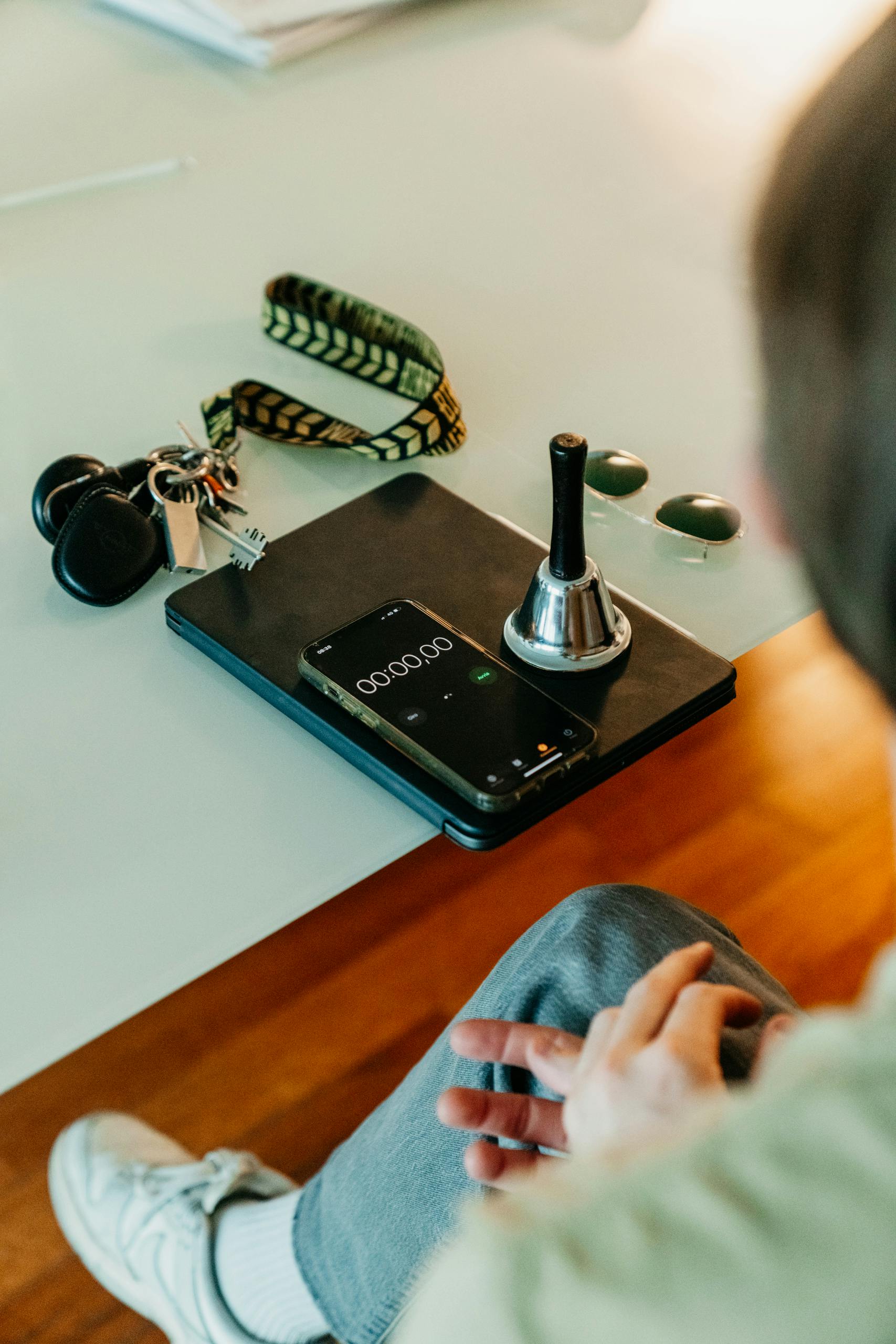
    He sat staring at his phone for the tenth time in an hour.

    The message had been sent that morning:

    “Any updates on the project?”

    It was now 8:00 PM.

    No reply.

    He hadn’t moved much,

    yet his body was on high alert.

    His heart was pounding as if he were running.

    His shoulders were tense.

    His head felt heavy.

    There was no danger in the room—

    no lion, no fire, no immediate threat—

    yet his body was acting

    as if something unresolved

    was still hanging in the air.

    After three days of waiting, a brief reply arrived:

    “It’s fine. Continue working.”

    Within one minute,the headache disappeared.

    His breathing returned to normal.

    His muscles relaxed.

    Nothing had changed in the external world,

    but his inner world shifted

    from a state of silent war to complete calm.

    The irony?

    The work itself took a full week of continuous effort,

    yet it didn’t exhaust him

    the way the waiting did.

    What Happens Inside the Brain While Waiting?

    If the mind were a fully modern device,

    it would easily distinguish

    between waiting for a message

    and facing a real threat.

    But the truth is simpler—and older—than that.

    A large part of the human brain

    still operates on primitive programming

    dating back thousands of years,

    when survival depended on one thing:

    Knowing whether the danger was over.

    Within that programming,

    there is a clear rule:

    The unknown is a potential threat.

    When you’re left without information:

    • no reply

    • no decision

    • no clear ending

    the mind doesn’t interpret this as calm.

    It treats it as an unresolved state

    that requires readiness.

    As a result, the sympathetic nervous system—

    responsible for alertness and survival—remains active,

    while the parasympathetic system,

    responsible for rest, digestion, and recovery,

    is put on hold.

    The result isn’t an explosion of anxiety,

    but a slow, silent drain.

    That’s why:

    • You feel tired even though you haven’t moved.

    • Your sleep becomes disrupted for no clear reason.

    • Real physical symptoms appear: headaches, muscle tension, digestive issues.

    This isn’t exaggerated anxiety.

    It’s a nervous system

    stuck in emergency mode

    without an actual emergency.

    How Is This Tension Broken?

    Tension, at its core, requires only two assumptions:

    • You believe something will happen.

    • You’re convinced that what will happen is bad.

    Break either assumption,

    and the nervous system calms almost immediately.

    When you allow a simple possibility—

    It might not happen at all—

    you move from suffocating certainty

    into possibility.

    And when you go one step further and ask:

    Even if it happens… is it truly catastrophic?

    the mind begins to exit emergency mode.

    At that exact point,

    it may happen—or it may not.

    In either case,

    the body returns to a state of safety.

    Where Is This Vulnerability Used Against You?

    1. Ambiguity as a Tool of Power in the Workplace

    In work environments,

    ambiguity is rarely accidental.

    The manager who delays a response.

    The organization that says, “We’ll get back to you.”

    The meeting that ends without a clear decision.

    All of these place you

    in a state of nervous suspension.

    You don’t just stop working—

    you remain on standby:

    continuous thinking,

    low-grade worry,

    heightened alertness.

    Without realizing it,

    you grant the other party

    space inside your mind.

    The paradox?

    The person who says

    “Yes,” or “No,”

    or even:

    “I don’t know yet, but I’ll tell you tomorrow at 10 AM”

    is perceived as stronger and more competent.

    Because they give other nervous systems closure.

    2. Ambiguity in Relationships: Waiting Without a Name

    In relationships,

    ambiguity isn’t always presented as harm.

    It’s often framed as depth,

    or space,

    or “not rushing.”

    But at the level of the nervous system,

    an undefined relationship is not neutral.

    It is a state of continuous emotional alertness.

    An unclear relationship:

    • no clear beginning

    • no clear ending

    • no explicit definition

    keeps one person—or both—

    in a state of constant internal waiting.

    The painful paradox?

    A clear ending, even if painful,

    is far kinder to the nervous system

    than hope suspended without a decision.

    3. Unfinished Tasks and Energy Drain

    Imagine every unfinished task

    as an open window on your computer.

    You may not be using it,

    but it still consumes memory and energy.

    The mind works the same way.

    Every:

    • unanswered message

    • postponed decision

    • unresolved project

    runs as an open threat in the background.

    That’s why you feel exhausted

    at the end of a day that looks “empty.”

    Not because you didn’t work—

    but because your nervous system

    never received a signal of closure.

    Decision as a Point of Safety

    In the last ten minutes of your day,

    close open loops with a clear decision:

    • Do it now.

    • Schedule it explicitly.

    • Or cancel it decisively:

    “I won’t do this.”

    A decision—any decision—

    sends one message to the mind:

    “The threat has been handled. You can rest.”

    One Final Question

    What are you waiting for right now?

    And what decision could end this waiting

    within minutes?

    Explore more

    Suggested Reading

    Explore the books behind Zenya Journal

    Recommended Books

  • Stop Building Habits. Start Subtracting Decisions.

    Stop Building Habits. Start Subtracting Decisions.

    You’ve heard the standard advice:

    “Build a morning routine.”

    “Develop a reading habit.”

    “Exercise consistently.”

    So you tried.

    You bought the planners.

    Set the alarms.

    Optimized the system.

    It lasted a week.

    Then it dissolved.

    The problem isn’t you.

    The problem is the philosophy of addition.

    You don’t need better habits.

    You need fewer decisions.

    Your day doesn’t drain you. Your decisions do.

    The issue isn’t weak willpower.

    It’s energy leakage.

    Every morning begins with negotiations:

    What do I wear?

    What do I eat?

    Where do I start?

    Which project deserves attention?

    Science calls this Decision Fatigue.

    Willpower is finite—like a battery.

    Every small choice, even between two coffees, draws from it.

    And when it runs low, the outcome is predictable:

    Poor decisions.

    Or no decisions at all.

    Sovereignty is subtraction.

    Real sovereignty isn’t built by stacking habits.

    It’s built by removing what doesn’t deserve a decision.

    Designing a Decision-Sparse Life

    1) Live inside a protected environment

    Picture every decision as furniture in the apartment of your mind.

    The more you add, the less space remains.

    A signature look eliminates an entire category of thought.

    A repeated menu does the same.

    Boredom isn’t the enemy.

    It’s the guardian of focus.

    2) Make the right action the only available action

    A habit is not repetition.

    It’s a path with no friction.

    Reading happens because the book is already there.

    Work happens because the file is already open.

    No motivation required.

    Only the removal of resistance.

    3) One decision. Dozens of consequences.

    Stop deciding per action.

    One decision on Saturday defines the week.

    One decision limits notifications.

    Hundreds of micro-choices vanish.

    The result: achievement becomes quiet.

    Habit culture says:

    “Be more disciplined.”

    Reduce the noise—and movement becomes inevitable.

    Willpower fluctuates.

    Systems endure.

    True achievement doesn’t look heroic.

    It looks like empty space on a calendar.

    A mind that didn’t bleed in small, unnecessary choices.

    You don’t need more strength.

    You need less noise.

    Explore more

    Suggested Reading

    Explore the books behind Zenya Journal

    Recommended Books

  • 7 Habits That Reduce Your Need for Everything… and Increase Your Self-Sovereignty

    7 Habits That Reduce Your Need for Everything… and Increase Your Self-Sovereignty

    How to Build a Life of Choice, Not Reaction

    Do you feel like you’re living in constant reaction?

    You’re asked, so you answer.
    A request is made, so you comply.
    You’re criticized, so you explain.

    The issue isn’t wanting many things.
    It’s needing them to feel okay.

    We seek money, relationships, recognition, acceptance, stability—
    not only because they’re practical necessities,
    but because we turned them into measurements of our worth.

    A study published in the Journal of Personality and Social Psychology suggests that
    70% of adult anxiety is directly linked to the fear of losing social approval or material security.

    Letting go isn’t isolation.
    It isn’t deprivation.

    It means:

    Owning yourself before you own anything.

    Living from choice, not reaction.

    Building relationships from desire, not need.

    Habit 1: Stop Explaining Yourself

    The Trap:
    We spend an average of 90 minutes a day explaining our choices to people who don’t live our lives. (Psychological Science)

    The Practice:
    Twice today, state a preference without justification.
    Say: “I prefer this.”
    No “because.”

    The Challenge:
    You’ll feel rude or vague.
    A voice will whisper: “They’ll think you’re arrogant.”

    The Key:
    People who respect you don’t require explanations to respect your boundaries.
    85% of what we assume others think about us is wrong. (Harvard)
    Explaining too much hands over authority you never agreed to give.

    Habit 2: Separate What You Own From Who You Are

    The Trap:
    In a survey, 68% of people admitted their self-worth drops during financial stress—even if temporary.

    The Practice:
    Track your spending for a week.
    Notice what’s identity-signaling versus a real need.

    The Challenge:
    Social pressure: “You deserve it.”
    “Treat yourself.”

    The Key:
    Respond with: “I’m content with what I have.”
    No defense.
    Research suggests this stance can reduce non-essential spending by 37% in three months.

    I am not what I own. And my identity doesn’t belong to things.

    Habit 3: Build Relationships From Wholeness, Not Lack

    The Reality:
    42% of people stay in unsatisfying relationships because they fear loneliness more than they dislike the relationship. (University of Chicago)

    The Practice:
    Decline two invitations this week that feel like obligation.
    Reclaim the time for something you enjoy alone.

    The Challenge:
    “Are you upset?”
    “Did something happen?”

    The Key:
    Say calmly: “I need some time to myself. I’ll catch up next week.”
    Healthy bonds don’t break under healthy boundaries.

    I love because I choose to—not because I need to.

    Habit 4: Replace External Validation With an Internal Compass

    The Pattern:
    The average gap between doing something and posting it for validation is just 22 minutes.

    The Practice:
    Complete a meaningful task—cook a meal, write a page, fix something—and tell no one.

    The Challenge:
    A hollow feeling when no one sees it.

    The Key:
    Journal one question:
    “How do I feel about what I did?”
    Use emotional words: calm, grounded, satisfied.

    What is done for applause ends when the applause stops.

    Habit 5: Practice Intentional Delay

    The Data:
    60% of impulse buys happen when the decision window is under 10 minutes.

    The Practice:
    Create a “48-Hour Wait List.”
    Every desire to buy goes there.
    Review it two days later.

    The Challenge:
    Limited offer. Last one.

    The Key:
    Ask: Does this solve a real problem—or a temporary feeling?

    Strength isn’t speed. It’s timing.

    Habit 6: Focus on Your Path, Not Others’ Paths

    The Effect:
    After just 30 minutes on Instagram, 3 in 5 people feel “behind.” (University of Pennsylvania)

    The Practice:
    Turn off social media notifications for 48 hours.
    Notice how often you reach for your phone automatically.
    Average: 58 times a day.

    The Challenge:
    The fear of missing something important.

    The Key:
    Start a small, daily project only you care about.
    Tangible progress reduces comparison by 45%.

    You’re not competing with anyone—except who you were yesterday.

    Habit 7: Accept That Some Questions Have No Immediate Answers

    Our Wiring:
    The brain prefers a wrong answer over the ambiguity of “I don’t know.”

    The Practice:
    Choose one recurring worry.
    When it appears, say: “Not now.”
    Schedule a 10-minute evening window to write down what remains.

    The Challenge:
    Feeling irresponsible for not “solving” it immediately.

    The Key:
    Distinguish between a problem that needs solving and a reality that needs acceptance.

    Peace isn’t having all the answers. It’s being at ease with the questions.

    How to Begin

    Week 1: Choose one habit.
    Week 2: Observe the challenges it brings without judgment.
    Week 3: Apply “The Key” step.
    Month 1: Integrate that habit, then introduce a second.

    Change isn’t linear.
    92% of people face setbacks when building habits.

    The measure of growth isn’t in never stumbling,
    but in how quickly you return to your chosen path.

    Letting go is gradual.
    Sovereignty is built daily.
    Freedom is the quiet choice to need less—
    not because you are strong, but because you have finally come home to yourself.

    Which habit will you start with?
    Tell me in the comments 👇

    Explore more

    If this spoke to you, you might also resonate with:

    You might also resonate with:

    Explore this next:

    Explore the books behind Zenya Journal

    Recommended Books

  • How to Build a Habit Without Being Harsh on Yourself

    How to Build a Habit Without Being Harsh on Yourself


    There was a book on my table for an entire year.
    Every day, I looked at it and told myself, “Tomorrow, I’ll start.”
    But the tomorrow I imagined—calm, organized, and motivated—never arrived.

    With time, I realized the problem wasn’t reading.
    It was the way I was trying to introduce a habit into my day as if it were an urgent task, instead of letting it become a natural part of life.

    This is not an article about the “perfect habit.”
    These are reflections on how a single habit can live with you—without weighing you down or making you feel constantly behind.

    1. Start with something too small to be called a goal

    We are taught that beginnings should be strong, ambitious, and clear.
    But what truly lasts often starts with something so small it barely feels important.

    The original plan was: “I’ll read for 30 minutes every day.”
    What actually remained was this: after finishing my coffee, I open the book and read just one page.

    A page that doesn’t feel like an achievement.
    It feels like a quiet breath between coffee and the start of the day.

    When you begin this small, you’re not building a habit.
    You’re opening a door that doesn’t require effort to keep open.

    1. Habits don’t come alone—tie them to something you already love

    Forgetting is not negligence; it’s a natural result of a busy life.
    But there is one thing that is rarely forgotten: morning coffee.

    So the agreement became simple: with the first sip of coffee, one page is opened.
    No reminders. No alarms.
    Desire leads, and the habit follows quietly.

    The same principle works elsewhere—saying “thank you” after washing your face in the morning, or turning a single page of a book before sleep.
    A habit doesn’t need to be forced into life; it grows next to what already exists.

    1. Tracking: the small signal that puts the mind at ease

    I tried smart tracking tools.
    Each one felt like an exam.

    What the mind actually needs is not complexity, but a clear signal that something has ended.

    So I returned to the simplest form: a paper calendar, a pen, and a single checkmark at the end of the day.
    That mark doesn’t measure productivity or record tasks.
    All it does is close the loop—quietly.

    It tells the mind: “This is done. You can breathe.”
    That simple closure is what allows continuity without resistance.

    1. Don’t miss twice—because coming back matters more than continuing

    Days will be missed.
    Not because of weakness, but because life doesn’t move in straight lines.

    The difference isn’t in stopping—it’s in the story told afterward.
    Instead of “everything is ruined,” the sentence becomes: “I come back.”

    And when coming back, there is no need to compensate or redesign the plan.
    The habit becomes smaller.
    The door is simply opened—without demanding motivation.

    This isn’t a journey of perfection.
    It’s a small act of loyalty to oneself.
    Even if you sit for a while on the side of the road, what matters is knowing the direction.

    1. Reward: don’t wait for the end

    Rewards are often postponed until after completion:
    “When I finish, I’ll reward myself.”

    Trying the opposite changes everything.
    The reward exists inside the moment itself.

    One page is read while drinking a favorite cup of coffee.
    And it becomes clear that the reward isn’t something added afterward—it’s the quality of the feeling during the act.

    This is what the soul learns quietly:
    this time with yourself is not an obligation, but a sanctuary you return to—not out of duty, but out of desire.

    Conclusion

    The habit that lasts is not built through force or strict discipline.
    It’s the habit that doesn’t turn against you—or require you to become someone else to survive.

    Start small.
    Tie it to something you love.
    Come back gently when you drift away.
    Let the reward live inside the moment, not at the end of it.

    In the end, the habits that stay with us longest are the ones that resemble us—and treat us like a companion, not a task.

    Explore more

    If this spoke to you, you might also resonate with:

    You might also resonate with:

    Explore this next:

    Explore the books behind Zenya Journal

    Recommended Books

  • 7 Habits That Build Your Self-Sufficiency… and Bring You Back to Your Center

    7 Habits That Build Your Self-Sufficiency… and Bring You Back to Your Center

    What kind of sufficiency do you want for yourself?

    Material, emotional, mental, spiritual —

    or simply a quiet presence that steadies you no matter how the outside shifts?

    Many spend years chasing this feeling and never reach it.

    Those who understand themselves more deeply discover something simpler:

    sufficiency isn’t given — it’s built.

    Built through tiny steps, quiet repetition, and unnoticed moments.

    Sufficiency isn’t isolation or hardness —

    it’s the place you return to when the world grows loud and tightens your breath.

    As The Almanack of Naval Ravikant: A Guide to Wealth and Happiness reminds us, happiness is a skill — and like sufficiency, it needs practice and tools. They complete each other.

    And once you build this inner center, you become less anxious, more grounded — even when nothing around you changes.

    Here are 7 small habits that bring it into your daily life.


    1) Write down what matters — don’t depend on memory

    Let your morning begin not with your phone,

    but with a blank page.

    Ten quiet minutes can return you to yourself.

    Write only two things:

    • What truly matters today
    • What must be done — even if small

    If you can, write tomorrow’s list at night.

    If not, write it when you sit down in the morning.

    When you cross out a task,

    that simple line gives your mind a quiet reward —

    a small, steady form of self-respect.


    2) Choose what aligns with you — and let “no” be an honest option

    Your energy doesn’t drain in one moment.

    It leaks through small “yes” answers that weren’t yours.

    One honest “no” a day can save a week of fatigue.

    Before agreeing to anything, ask:

    • Does this fit my time?
    • Does it serve me?
    • Do I truly want it — or am I being polite?

    If the answer isn’t a sincere yes,

    “Not now” is enough.

    When you protect your time,

    your energy naturally moves toward what matters.


    3) Make completion your habit — before chasing new beginnings

    Starting is easy.

    Finishing is rare.

    What stays with you isn’t the volume of what you do —

    it’s what you complete.

    Every night, choose one clear task for the next day.

    Write it as a simple title.

    When it’s done, cross it out.

    That line is proof that your intentions turned into action —

    that you’re not stacking ideas, but building results.

    Completion creates confidence.

    Confidence creates sufficiency.


    4) Keep your daily habits small and steady

    Even 30–45 minutes of movement can shift your entire mood.

    Ten pages a day become a full book every month —

    and reading is one of the simplest ways to raise your inner value.

    Choose the time for your habit before the day begins.

    If you miss it, move it to tomorrow — without guilt.

    Consistency, not intensity, creates lasting change.

    A small habit that continues is stronger than a big one that disappears.


    5) Notice your emotions — don’t bury them

    Emotions don’t disappear when ignored — they grow louder.

    Acknowledging a feeling softens it.

    Ignoring it intensifies it.

    Emotions are messages, not enemies.

    Those who understand them move through life with clarity;

    those who resist them get pushed by them without noticing.

    Name your feeling simply:

    anxiety, longing, flatness, excitement…

    What you name becomes easier to hold.

    What you ignore becomes your driver.


    6) Break your tasks down — gently

    When everything piles up, don’t rush — pause.

    A single minute of clarity can be more valuable than an hour of scattered effort.

    When your tasks feel heavy, stop for a moment:

    Write your list in order — from the most important to the simply important.

    Then choose one task only.

    The pressure will start to soften,

    even if the list stays long.

    The goal isn’t to finish everything —

    but to stay in control of yourself.


    7) Practice quiet gratitude

    Small things shift us more deeply than large achievements.

    Gratitude isn’t emotional exaggeration —

    it’s seeing what already exists,

    so it doesn’t pass unnoticed.

    Each day, write three things — not about coffee or sunlight,

    but about your inner world:

    • A late thought that changed your understanding
    • A step you kept despite heaviness
    • A moment of clarity after internal chaos
    • A conversation that lifted you
    • A feeling of being slightly stronger than yesterday

    What you pay attention to grows.

    What you focus on repeats.

    At the end of the week, read your list.

    You won’t find a perfect life —

    you’ll find a clearer, more grounded you.

    And that difference is everything.


    Before You Go

    We don’t change in a single moment.

    We change when we see ourselves more clearly — day after day.

    When we name the feeling, finish what we start, and widen our gratitude.

    Sufficiency isn’t a moment of clarity — it’s an accumulation:

    A habit repeated.

    A task completed.

    A feeling understood instead of buried.

    Start with what you can today.

    Let the rest grow with you — slowly, gently, steadily.

    Start.

    Repeat.

    And the path will reveal itself as you do.

    Explore more

    If this spoke to you, you might also resonate with:

    You might also resonate with:

    Explore this next:

    Explore the books behind Zenya Journal

    Recommended Books

  • 6 Habits That Boost Your Confidence Instantly

    6 Habits That Boost Your Confidence Instantly


    Confidence isn’t luck — it’s practice.

    Why do some people move with a quiet steadiness —
    while living through the very same storms the rest of us do?

    Are they stronger? Smarter? Luckier?

    The answer is simpler:

    Confidence isn’t a feeling — it’s a practice.
    Tiny steps, repeated, until they become part of who you are.

    Recent research shows that small, consistent shifts — movement, routines, clear intentions —
    can lift confidence within weeks, regardless of age or circumstances.

    In short:

    Confidence is built, not bestowed.

    Below are six daily practices that rebuild confidence —
    slowly, quietly, and for good.


    1. Move, Even When You’re Afraid

    Confident people aren’t fearless; they move with fear.

    As The Confidence Gap explains:
    small action restores a sense of control — and control breeds confidence.

    One imperfect step beats a perfect day of overthinking.


    1. Consistency Over Motivation

    Motivation starts the engine; consistency drives the journey.

    As Atomic Habits reminds us:
    progress compounds when actions repeat.

    Confidence grows not with the first step —
    but with the steps you keep taking after the spark is gone.

    Pause for a breath:
    When was the last time you kept a tiny promise to yourself for seven days straight?


    1. Let Experience Teach You

    Advice informs; experience transforms.

    Research at Stanford highlights a simple truth:
    we learn and sustain change far more through doing than through theory.

    As Carol Dweck writes in Mindset:
    the brain grows confident by trying new things — even when the first attempt fails.

    Every imperfect step is a deposit in your confidence account.


    1. Be on Your Own Side

    Harshness freezes progress; kindness unlocks it.

    When you slip, say:
    “I’m learning.”

    Each time you rise again, you send your mind a message that rewires belief:
    I’m still capable.

    Mini check-in:
    If a friend spoke to you the way you speak to yourself, would you keep them close?


    1. Tie Every Step to a Clear “Why”

    Effort without direction scatters.
    Purpose focuses energy — even a small one.

    Before you act (workout, habit, choice, rest), ask:

    “What’s the goal?”

    When you know why, the how appears.

    Approval is optional.
    Alignment is essential.

    1. Practice Daily Gratitude and Choice

    Start and end your day with the simple question:
    “Who do I want to be today?”

    Gratitude tilts your attention toward what is growing.

    Write three small notes:
    a lesson, a kept step, or a quiet moment that mattered.

    Lower the bar.
    Choose one clear goal for today.

    One steady step outperforms a thousand delayed plans.


    A Final Word

    Confidence rarely arrives in a surge —
    it accrues in quiet layers.

    It grows when you move despite hesitation,
    continue after motivation fades,
    and learn before you feel “ready.”

    It strengthens when you’re gentle with yourself,
    clear on your purpose,
    and faithful to what you can change.

    In the end, your smallest choices sculpt your days.

    The step you take today — however small —
    can reshape the months ahead.

    Return to yourself… and begin.

    Explore more

    If this spoke to you, you might also resonate with:

    You might also resonate with:

    Explore this next:

    How to Build a Habit Without Being Harsh on Yourself

    Explore the books behind Zenya Journal

    Recommended Books

  • Your Small Habits… Shape Your Destiny

    Your Small Habits… Shape Your Destiny


    They told you success requires superhuman powers, rare talent, or extraordinary luck.
    But that’s a lie.

    Real transformation doesn’t happen through sudden miracles — it begins in the ordinary.
    The secret is simple: look honestly at your day.
    Where does your time truly go?
    Which patterns push you forward, and which ones quietly drain your life?

    Criticism, when used wisely, is not destruction — it’s a sharp lens that helps you see what to cut away and what to nurture.


    Vision Before the Path

    If you don’t design your own life, someone else will — and their plan won’t serve you.
    That’s why you must ignite an inner drive and hold a clear vision of your future.

    You don’t need to see the whole road ahead.
    You only need to know the destination.

    That vision becomes your compass — the reason you wake up, and the strength that keeps you moving when things get hard.

    The question is: what picture do you hold of your destination, even if the path is still hidden?


    The Hidden Loop of Habits

    Every habit starts with a tiny spark — a thought, a scene, or a small goal that wakes something inside you.
    That spark becomes a desire.
    The desire pushes you to act.
    Action, when repeated, turns into a habit.

    And what locks it in place?
    The quiet satisfaction of knowing you’re becoming the person you want to be.

    But here’s the truth:
    no habit lasts without self-love and a clear vision of your identity.
    If you don’t truly value yourself, you’ll quit at the first obstacle.

    A habit is not just an action you repeat — it’s a reflection of who you believe you are.

    Drinking one glass of water every morning is not just hydration — it’s proof that “I care about my health.”
    And that tiny spark can grow into a lasting habit.


    Habits and Self-Identity

    Goals end the moment you achieve them, but identity stays.
    A habit is not just a way to reach a result — it reshapes how you see yourself.

    Saying “I am a reader” is far stronger than “I want to read a book.”
    Saying “I am active” carries more power than “I want to exercise.”

    Your daily habits are the evidence of who you are becoming.
    What you affirm to yourself today can turn into your reality tomorrow, once it’s backed by action.

    It begins with a single word of truth, followed by a small proof in your routine.
    Over time, those proofs accumulate until your identity becomes unshakable.


    The Discipline Behind Change

    The secret to every habit is discipline.
    Not luck, not talent — discipline is what separates dreamers from doers.

    New habits don’t require giant leaps.
    They begin with small, consistent steps:
    writing down your goals, turning them into daily actions, and weaving them into your routine until they feel natural.

    Shape your environment to support you instead of holding you back.
    Over time, these little choices will shape a whole new life.

    Remember:
    discipline is not a cage — it’s the freedom that takes you where you truly want to go.


    Small Details, Big Changes

    It’s not the dramatic decisions that reshape your life, but the quiet actions you repeat every day.

    Real transformation begins with small details that appear trivial — until they accumulate and shift the course of your future.

    Decide to read just ten pages a day.
    At first it feels small, almost too easy to matter.
    But months later, you’ve completed several books and stepped fully into the identity of “a reader.”

    That is the hidden strength of small habits:
    they don’t change you overnight, but they shape you in ways that last.


    Final Note

    Small habits are not side details in life — they are the foundation of who you become.
    Don’t wait for a miracle to transform you.
    The real miracle is hidden in what you choose today, and repeat tomorrow.

    Thinkers and researchers in this field — James Clear (Atomic Habits), Charles Duhigg (The Power of Habit), and B.J. Fogg (Tiny Habits) — all agree:

    Transformation doesn’t begin with one massive decision, but with small, deliberate steps that quietly reshape your future.

    You are not defined only by your dreams — you are defined by what you consistently do.
    Choose one habit, commit to it with honesty, and let it guide you.

    Remember: you are the leader of your life, not a passenger.
    What you plant today is exactly what you will harvest tomorrow.

    If you want real change, don’t try to fix everything at once.
    Start with one habit in every area of your life where you feel unsatisfied.
    One small shift in each field is enough to set the foundation for complete transformation.


    Your habits are only the beginning.
    To see real transformation, read Change Begins with Your Habits.

    Explore more

    If this spoke to you, you might also resonate with:

    You might also resonate with:

    Explore this next:

    Explore the books behind Zenya Journal

    Recommended Books

  • Change Begins with Your Habits: 5 Essential Habits That Transform Your Life

    Change Begins with Your Habits: 5 Essential Habits That Transform Your Life


    Successful people agree on one truth:
    change doesn’t come from huge decisions or sudden leaps.
    real change starts within — through a sincere desire that turns into small, repeated steps that make a difference day after day.

    but desire alone is not enough.
    you need awareness, and you need to ask yourself honest questions:
    what kind of life do I truly dream of?
    and the deeper one: what reality must I change to get there?

    that’s when you realize change isn’t an illusion or out of reach.
    it’s a journey that begins with these questions and continues through your daily habits.

    no matter how your goals or circumstances differ, there are five essential habits that have proven their strength.
    they can shape your days and open the path to your best self — step by step, without rushing or chasing illusions.


    the mind is nourished by reading and becomes clear through writing

    reading and writing are the two most powerful tools to build a strong and conscious self.
    reading expands your horizons, exposes you to new ideas and experiences, and lets you step into the minds of great thinkers.

    writing, on the other hand, organizes those ideas, releases emotions honestly, and turns fog into clarity.

    warren buffett says:
    “the more you read, the more you know. and the more you know, the greater your ability to succeed.”
    he himself spends most of his day reading and writing.

    a harvard university study also showed that daily journaling improves mental health by 27% and significantly increases goal clarity.

    because our schedules are packed, audiobooks have become a practical solution.
    an hour in the car can turn into a “mobile university,” where you listen to inspiring or knowledge-rich books.

    james clear in atomic habits sums it up perfectly:
    “small actions, when repeated regularly, build a new identity.”

    listening to a book daily may seem small, but over time it creates massive growth.

    and focus is key.
    elon musk, for example, dedicates each week to solving one major problem in one of his companies.
    after a year, that means 52 problems solved — a simple habit that became one of his greatest secrets to success.

    imagine applying this method to your own life:
    choosing one habit or one challenge, and sticking with it until it’s complete.
    how different would your future look after a year?


    your health is your wealth

    success requires a healthy body.
    exercise is not a luxury — it’s fuel for your energy and focus.
    just 30 minutes of walking or daily movement can reduce stress by over 20%, according to multiple studies.

    barack obama, for example, started his mornings with an hour of exercise before meetings.
    he said it gave him clarity and better decision-making.

    cristiano ronaldo is another example: his discipline is the foundation of his long-lasting performance.

    “he who has health, has hope. and he who has hope, has everything.”

    success needs a strong body: eat well, drink water regularly, sleep enough, and make exercise a daily habit.

    modern food carries fewer nutrients than 50 years ago due to soil depletion,
    so supplements have become a necessity to support your focus and energy.
    your health truly is the wealth that fuels every other success.


    gratitude and thankfulness

    gratitude changes the lens through which you see life.
    writing down three things you’re grateful for each day reprograms your brain to focus on blessings instead of lack.

    oprah winfrey says:
    “if you only write down three things you’re grateful for every day, your life will begin to change.

    she has kept a gratitude journal for decades and considers it one of her greatest sources of joy.

    a university of california study found that practicing gratitude regularly improves sleep and significantly boosts happiness.

    gratitude doesn’t just change your external reality — it transforms how you feel inside.
    it lightens your heart and gives you the emotional energy to keep moving forward.


    give yourself the benefits of meditation

    meditation is not a luxury — it’s a necessity in today’s noisy world.
    just a few minutes of silence each day provide inner calm that reflects on your focus and decisions.

    ray dalio, one of the world’s leading investors, practices meditation twice a day and calls it:
    “the most important tool in my life.”

    scientific studies confirm that regular meditation lowers cortisol — the stress hormone — by up to 20% within weeks.

    meditation is simply giving yourself permission to pause, breathe deeply, and regain clarity.


    know when to stop… to begin again

    this may not look like a habit at first, but it’s the root of them all.
    it’s what gives you the ability to say no:

    no to laziness instead of exercise,
    no to wasting hours instead of opening a book,
    no to distraction when focus is needed.

    successful people don’t allow what doesn’t serve them to steal their time and energy.
    they train daily in this habit until it becomes second nature:
    stopping when needed, evaluating choices, accepting loss if necessary, then moving forward with clarity.


    the root of habits

    not every battle deserves your time or energy.
    successful people learn to say no to what drains them,
    and yes to what helps them grow.


    in the end

    success is not born from random decisions or sudden leaps —
    it grows from small habits, repeated daily, that build you up step by step.

    reading and writing expand your mind and clarify your thoughts,
    health gives you energy,
    gratitude fills you with joy,
    meditation restores your calm,
    and knowing when to stop keeps you focused.

    start with just one habit today.
    don’t wait for the perfect moment.
    one small step now can open the doors to big change tomorrow.

    which of these five habits will you start with today?

    change is only complete when it reflects in who you are.
    discover more in Why Your Life Reflects Who You Are.


    Explore more

    If this spoke to you, you might also resonate with:

    You might also resonate with:

    Explore this next:

    Explore the books behind Zenya Journal

    Recommended Books