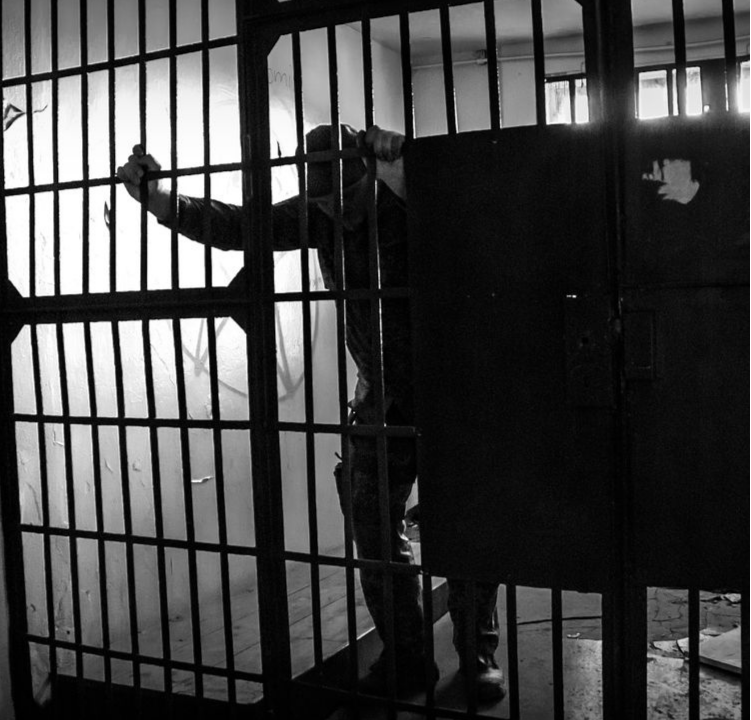
“I can’t keep paying the price for decisions that were never mine to begin with, so I’m leaving.”
I think this is a sentence we should use as a principle in life more often than we do. It doesn’t mean running away from responsibility or abandoning reason. It means recognizing when we have started paying the price for a life whose terms we never chose in the first place.
Before the Decision Becomes Your Life
G. V. Desani, the Indian writer and journalist who later became known for his novel All About H. Hatterr, was not yet eighteen when his family arranged a marriage for him.
He refused the life that had been chosen for him. He left, and in 1926, at just seventeen, made his way to Britain.
Perhaps the most important part of his story isn’t that he left his country. It’s that he left before someone else’s decision became an entire life he would have to live.
He could have married and later told himself that it had already happened, that there was now a family, responsibilities, and too much at stake to turn back.
But he left before that.
Sometimes the entire difference lies in the moment when you say: I didn’t make this decision, and I’m not going to wait until it becomes too difficult to get out.
Who Made These Decisions in the First Place?
There are decisions we make and pay the price for. That is fair. But what about the decisions that were made before we were even given the right to choose?
We didn’t choose where we were born, the society we grew up in, its customs, or what it decided was shameful, acceptable, or simply “the way you’re supposed to live.”
The problem isn’t that every society has its own rules. The problem begins when those rules become the boundaries of your life, and then you are expected to pay the price for them too.
At some point, you have the right to ask: If the decision wasn’t mine, why should its cost be?
Of course, this doesn’t mean leaving is the answer to everything. Some problems will follow us wherever we go, and some things need to be left behind within ourselves before we leave a place. But when the place itself is part of the problem, leaving becomes a reasonable option.

Leaving… But With Responsibility
Caroline Jessop’s story was different.
She grew up within the FLDS community, and at eighteen, she was married to a man more than thirty years older than her who already had other wives. She had eight children. When she left in 2003, the easiest way to describe what happened might have been to say that she escaped.
But she took all eight of her children with her. She left with only twenty dollars, then entered a custody battle that eventually ended with her gaining custody of her children.
And this is where the issue becomes more complicated than simply saying that we are not responsible for decisions we didn’t make.
Caroline didn’t choose the circumstances that placed her in that life. But she also knew that her children were not a decision she could leave behind.
She rejected the life, but carried her responsibilities with her.
Maybe that is why the question isn’t always: What do I leave behind?
Sometimes the harder question is: What must I take with me?
Leaving has a price of its own. When we think about it, we calculate the money, the loneliness of being somewhere unfamiliar, the language, starting over, and everything we will leave behind. But we rarely calculate the price of staying in the same way.
The years that will pass. The opportunities we may give up. The decisions we will postpone because the place makes even our simplest choices harder than they need to be. Perhaps even an entire life repeated through our children, as could have happened with Caroline’s.
Leaving is expensive, certainly. But staying isn’t free.
Some burdens remain on our shoulders not because they belong to us, but because we have grown used to carrying them. And sometimes, you realize you have already paid enough.
What Was Really in the Bag?
In the end, the hardest things I carried weren’t clothes or documents. I had to decide what deserved to come with me in the first place.
My responsibilities? Yes.
The consequences of decisions I made myself? Absolutely.
But the rules that had been written for me, the fear of breaking them, and the things I tolerated simply because “that’s how things are”? No.
Moving doesn’t erase the past, nor does it make every old decision disappear simply because you are somewhere else. But it creates distance between you and many of the things you once believed, while living in the middle of them, were inseparable from life itself.
Some of them weren’t.
They were simply part of the place you left behind.
And in the end, we take with us what belongs to us, and leave behind what we were never supposed to carry in the first place.
Further Reading
The Knot and the Saw: Why Do We Make Life Harder Than It Needs to Be?
Maxim Gorky: A Life Harsher Than His Novels
Explore the books behind Zenya Journal
If you want more than just ideas, explore the free resources at Zenya Journal and start putting them into practice.
Share your thoughts